


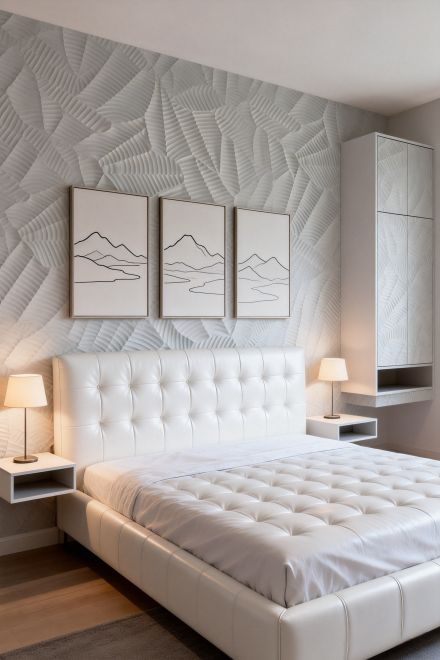
In 2026, the flexible ceramic tile market is in a development phase with favorable policies and structural adjustments. It takes green, lightweight and customized production as its core development directions. Its penetration rate in the building decoration materials sector keeps rising, yet it also faces challenges like supply-demand imbalance and fiercer competition.
-
Policy-driven Growth and Distinct Environmental Advantages
Flexible ceramic tiles feature low-temperature calcination (around 200℃), over 70% energy saving and 100% recyclability. They were included in China's green product certification system in 2025, aligning with the country's dual carbon goals. Many regions have launched subsidy policies. For example, Quanzhou offers rewards of 30,000 to 40,000 yuan per certificate for flexible ceramic tiles with star-rated green building material certification, and such products get priority in government procurement. In green building certification, flexible ceramic tiles can earn 12 LEED points, much higher than the 3 points for traditional ceramic tiles. Policy dividends are accelerating their market penetration.
-
Market Scale and Demand Structure
China's flexible ceramic tile market reached about 18.5 billion yuan in 2023, a year-on-year increase of 12.5%. It is expected to hit 24.5 billion yuan in 2026, with the compound annual growth rate slowing down to 6.5%-7.2%. The slower growth results from the adjustment of the real estate industry and conservative market demand. On the demand side, urban renewal, old community renovation and green building projects become the core application scenarios. Market demands for curved surface design and zero formaldehyde drive flexible ceramic tiles to replace traditional ceramic tiles and stone-like paint. Civil buildings and general public buildings form the major market, with commercial spaces and residential renovation contributing over 70% of the total consumption.
-
Competitive Landscape and Product Differentiation
The core competitors of flexible ceramic tiles are traditional ceramic tiles, natural stone and stone-like paint. Flexible ceramic tiles have obvious advantages in weight, construction efficiency and adaptability to old renovation projects. Their overall cost is 30% lower than traditional ceramic tiles, and their service life ranges from 15 to 30 years, far longer than the 3 to 5 years of stone-like paint. However, they perform slightly worse in extreme wear-resistant scenarios. The industry suffers from overcapacity in low-end products and a shortage of high-end ones. By the end of 2024, the total production capacity reached 450 million square meters, with an apparent consumption of about 280 million square meters and a capacity utilization rate of only 62%. There is a surplus of mid-and low-end products, while the supply of high-end products such as antibacterial and Grade A fire-resistant flexible ceramic tiles is insufficient. Fewer than 10 enterprises can achieve stable mass production of such high-end products.
-
Development Challenges and Trends
The industry faces key challenges including technological bottlenecks, severe product homogeneity and huge inventory turnover pressure. In the first half of 2024, the average inventory turnover days of the industry stood at 85 days, and the accounts receivable turnover days exceeded 95 days. For future development, customized production, online channel expansion, growing export business (the export ratio of some enterprises reaches 30%-40%) and functional upgrading (such as air permeability and cold resistance) have become the key directions for enterprises to break through the predicament.
Key News of the Flexible Ceramic Tile Industry in January 2026 News in the sector in January 2026 mainly focuses on four aspects: the implementation of industry standards, technological innovation, project applications and market policies. The key information is sorted out as follows:
Standard and Policy Updates
- Implementation of *General Principles for Selecting High-quality Building Materials*: Officially implemented on January 1, 2026, flexible ceramic tiles show outstanding performance in four indicators: health, safety, environmental protection and quality. Some high-end products reach the 5A international advanced level and are listed as the preferred facing materials for public buildings. This promotes their penetration in old renovation and rural construction projects. 2. Sustained green building material subsidies: Many regions have launched subsidy policies. Quanzhou offers 40,000 yuan and 30,000 yuan per certificate for three-star and two-star green building material certified flexible ceramic tiles respectively, and these products get priority in government procurement. Ningxia includes flexible ceramic tiles in home decoration subsidies, with individual buyers enjoying a 15%-20% subsidy of up to 5,000 yuan.
Technological Achievements and Patents
- New achievement registration: On January 1, the scientific and technological achievement of "high-durability and high-safety energy-saving decorative flexible ceramic tiles for buildings based on powder surface modification and 3D molding technology" was registered. The product has the advantages of light weight, thin thickness and flexibility, and can replace traditional materials. It has been promoted and applied by enterprises in Jiangsu Province, bringing considerable sales volume.
- Patent authorization for material distributing device: On January 24, Guangxi Rouxinmei New Materials Co., Ltd. obtained the patent for a "flexible ceramic tile material distributing device". The device removes air bubbles from the slurry through a shaking and stirring defoaming mechanism, improves product quality and helps optimize the production process.
Project Application Cases
- Foshan Museum Project: On January 21, the ecological flexible ceramic tiles of New Pearl Green Materials were applied to the wall of Foshan Museum. With the characteristics of light weight, thin thickness, flexibility and toughness, the product adapts to the needs of cultural venues. Its microporous structure can adjust humidity, and the Grade A fire resistance standard ensures the safety of cultural relics. It also presents Lingnan's ancient charm in a modern way.
- Smart Manufacturing Integration in Wuxi Tongchuang: Reported on January 14, Wuxi Tongchuang New Materials Co., Ltd. expands the application boundary of flexible ceramic tiles through the integration of smart manufacturing, full-chain services and innovation, and provides customers with one-stop solutions from material selection to construction.
Industry Analysis and Market Trends
- Market scale and competitive landscape: An industry report released on January 30 shows that China's flexible ceramic tile market is expected to reach 12 billion yuan in 2026, with a compound annual growth rate of 15.2% in the past three years. China accounts for 65% of the global production capacity. Leading domestic enterprises are increasing R&D investment, and their patents in structural design have surpassed those of European and American enterprises. However, the high-end market is still dominated by European brands.
- Enterprise development dynamics: On January 30, Jiangsu Neolithic Flexible Ceramic Tiles released an industry analysis. It compared the performance of flexible ceramic tiles with traditional materials, emphasized the importance of technological innovation for enterprises to seize the mid-and high-end market, reminded the market of rough production processes of low-end manufacturers, and suggested choosing brands with benchmark projects.
 Privacy settings