


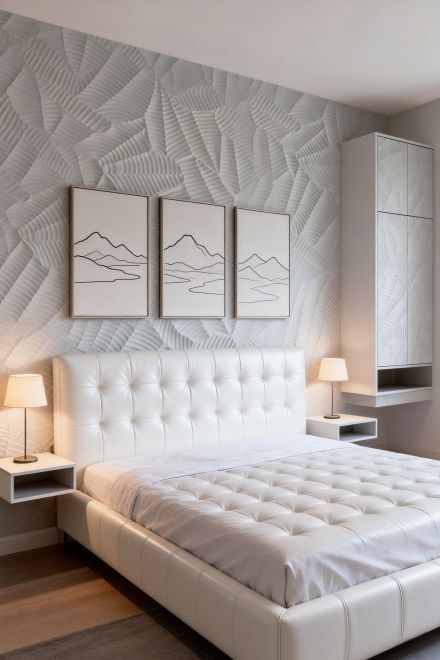
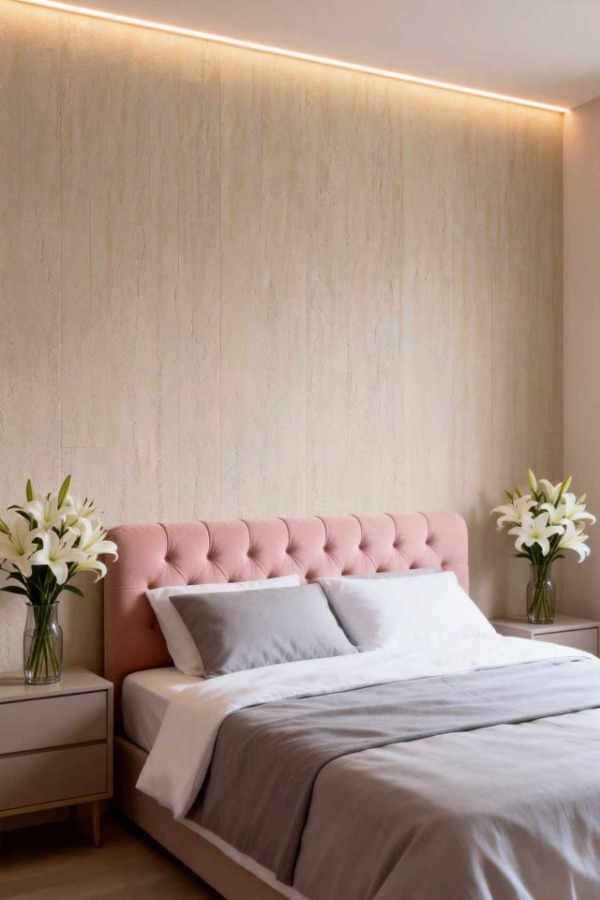
Amid the industry-wide shift toward high-end, green, and intelligent transformation in the building materials sector, soft ceramics—a novel flexible decorative material—has emerged as a strong contender, leveraging its unique advantages.
From its impressive debut at the Fujian Building Materials Expo in 2025, securing overseas orders, to explosive growth in international markets, and further bolstered by policy support, soft ceramics is transitioning from a "niche innovation" in a specialized field to a "mainstream choice" recognized by the market. It has become a key driver in revitalizing green building material consumption and supporting urban renewal.
Policy empowerment fuels green transformation, ushering in a development window for soft ceramics
In September 2025, six departments including the Ministry of Industry and Information Technology jointly issued the "Steady Growth Work Plan for the Building Materials Industry (2025-2026)," which explicitly states that China's green building materials revenue will exceed 300 billion yuan by 2026. The plan focuses on supporting the expansion of industries such as advanced ceramics and promotes the industry's transition from "scale-oriented" to "high technology and high value-added." Measures such as cultivating "Six Zero" demonstration factories, promoting green building materials in rural areas, and implementing urban renewal policies provide precise policy support for the development of soft ceramic products.
As a typical environmentally friendly building material, soft ceramic primarily uses modified clay (MCM) as its main raw material, featuring a low-carbon and eco-friendly production process. During construction, it eliminates the need for tooth saw cutting, reducing dust and noise pollution. Its lightweight properties also minimize auxiliary material usage, perfectly aligning with the core requirements of green building materials as outlined in the policy.
Market performance is impressive, with domestic and international orders continuously rising
At the Fujian Construction Expo held in March 2025, Jinjiang Dianshang Craft Building Materials attracted widespread attention with its 2 to 4 millimeter thick flexible soft ceramic products. On the first day of the exhibition, it secured orders from a Malaysian client, including four series of inorganic inkjet soft ceramic products such as travertine and star-moon stone, intended for villa facades and landscape decoration in the region.
After the exhibition, a South American buyer specifically visited the company to discuss cooperation, further expanding its overseas market presence. Coincidentally, Guangdong Fotile's soft ceramic products saw a fourfold increase in overseas orders in July 2025, with the order backlog extending several months ahead. Its "prefabrication + self-adhesive" model, which significantly reduces labor costs, has been highly favored in regions with higher labor costs such as Europe and Southeast Asia.
In the domestic market, soft ceramic has been successfully applied in multiple public welfare projects, including the Wuli Street renovation in Yongchun, Nanshan Experimental Primary School in Nan'an, and the Zhongyuan County Hospital of Traditional Chinese Medicine in Zunyi City, Guizhou. It has also been widely used in the rural revitalization project in Fuding, achieving both aesthetic and practical value.
Technical features stand out, addressing industry pain points
The core competitiveness of soft porcelain stems from its "flexible yet robust" product characteristics. Compared to traditional tiles, its weight is only 1/200 that of stone, effectively reducing building load and eliminating the safety risks of high-altitude detachment at the source. In contrast to coatings, it exhibits superior aging resistance and longer service life, while also offering waterproofing, impact resistance, flame retardancy, and multiple other functions.
In terms of construction efficiency, soft porcelain demonstrates significant advantages, with two workers capable of completing 200-300 square meters of installation per day. A 7,000-square-meter exterior wall renovation project in a school campus was completed in just 25 days without requiring large-scale removal of the original walls—direct tiling achieved uniform transformation results, making it particularly suitable for urban renewal scenarios with high demands on construction timelines and environmental requirements.
Technologically, through high-temperature-resistant molds for texture replication and inorganic inks for color generation, soft porcelain can precisely replicate the natural textures of tiles and stone. Its flexible properties enable arbitrary bending, meeting complex design requirements and offering greater creative possibilities for architectural decoration.
Industry reshuffling accelerates, with leading companies spearheading upgrades
Despite the promising prospects of the soft ceramic market, the industry has high entry barriers, with an investment of nearly 5 million yuan for a high-speed inkjet production line and supporting equipment. Achieving large-scale production requires tens of millions in investment, leaving some small and medium-sized enterprises in a "half-dead, half-alive" predicament and intensifying industry consolidation.
Against this backdrop, leading companies have built competitive barriers through technological innovation and channel deepening. Dianshang Craft Building Materials specializes in the research and development of inorganic inkjet soft ceramics, exporting products to regions such as South Korea and the Middle East. Fotile, with 11 years of industry experience, has transformed from a small exterior wall PK tile brand to a mainstream soft ceramic brand, achieving compound growth. Waco, through breakthroughs in nanoceramization technology patents, has established the 2026 imitation stone paint industry standard, driving the soft ceramic category toward premiumization.
Looking ahead, as urban renewal accelerates and green building standards are fully implemented, the soft ceramic industry will greater development opportunities. Industry insiders believe that rising labor costs, an aging population, and stricter environmental regulations will further drive the transition from traditional spray coating to green fast-installation models like soft ceramics.
Meanwhile, with more companies entering the field, industry standards will gradually improve, and product applications will expand from commercial spaces and urban renewal to prefabricated buildings and high-end homestays. Under the dual impetus of policy guidance and market demand, soft ceramics, as an innovative material, is providing a Chinese solution for the green transformation of the architectural decoration industry, writing a new chapter in the high-quality development of green building materials.
Soft porcelain has a broad future prospect, and procurement needs to focus on compliance and adaptability.
Future prospects: Soft ceramics are in line with the trend of green building and "dual carbon", with an annual market growth of 18.5%. There is a strong demand in scenarios such as old renovation, high-rise buildings, and irregular decorations. With the upgrading of technology, its simulation texture and weather resistance will continue to improve. With the support of policy subsidies, its application will further penetrate into home decoration and cultural tourism projects, becoming an important substitute material for traditional tiles and stone.Procurement Advice
- Verify qualifications and require merchants to provide testing reports that meet the standards of "Flexible Decorative Bricks", with a focus on bending strength, environmental indicators, and weather resistance data.
- Choose reputable brands and prioritize enterprises that have passed green building materials certification and have large-scale project cases to ensure product quality and after-sales service.
- Match the usage scenario, choose freeze-thaw resistant and UV resistant exterior walls, focus on environmental protection and texture indoors, and pay attention to bendability in irregular scenes.
- On site verification, through simple tests such as bending and soaking, confirms that the product has no problems such as cracking, falling slag, or discoloration.
 Privacy settings