


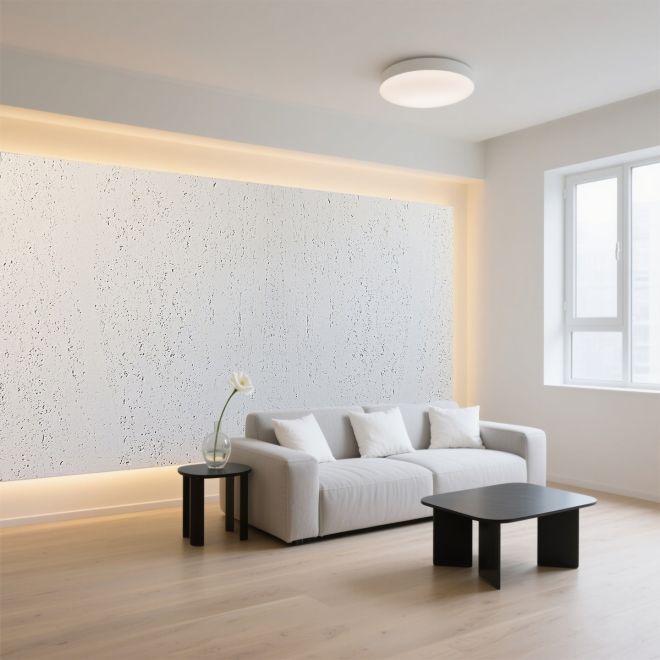
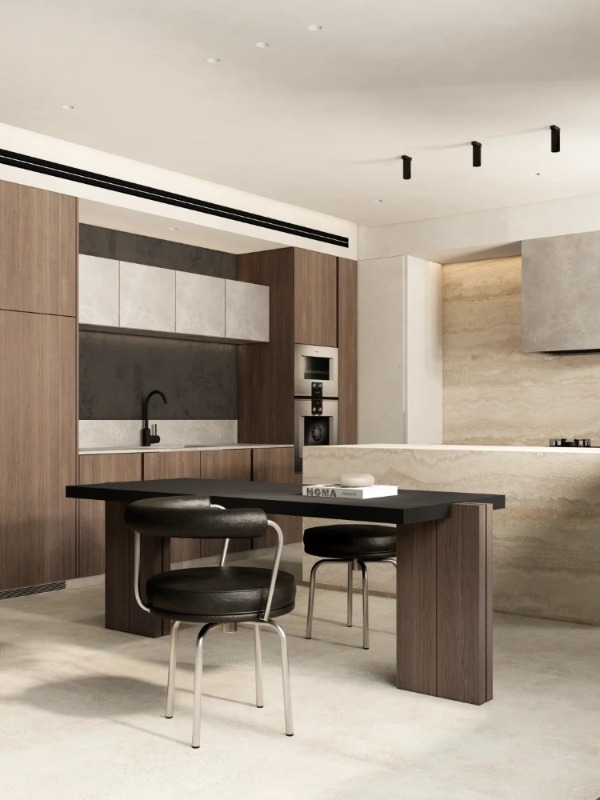
Inorganic organic composite technology is the underlying support for achieving the core performance of "combining rigidity and flexibility" in soft ceramics, and it is also a key technological breakthrough that distinguishes it from traditional ceramics. This technology uses inorganic mineral powders (such as soil, mineral powder, industrial waste residue, etc.) as raw materials.
The core processes include:
- The first is interface modification, which involves using coupling agents to introduce active organic groups on the surface of inorganic powders, thereby reducing the interfacial energy between inorganic and organic phases. This addresses the poor compatibility between the two and significantly enhances the material's strength, aging resistance, and flame retardancy
- The second is the three-level maturation process, where the raw materials are kept at a constant temperature to promote the full recombination of molecular chains, giving the product excellent flexibility (with bending strength more than three times that of traditional ceramics)
- The third is precise control of hollow fillers, adding fillers such as vitrified microspheres to control the specific gravity between 0.8-2, balancing lightweight and thermal insulation performance
This technology not only retains the durability and fire-resistant properties of inorganic materials but also incorporates the flexibility and impact resistance advantages of organic materials. Ultimately, it achieves the core characteristics of lightweight, crack-resistant, and low-carbon soft ceramics, providing a crucial pathway for the performance upgrade of architectural decorative materials.
The highlights of soft ceramics in terms of "green and low-carbon, fast renovation, and overseas expansion":
Ⅰ. Exhibition and New Product Updates
- Guangzhou Design Week 2025 (December 5-8): As a pioneer in soft porcelain technology and the principal editor of industry standards (e.g., JC/T 2219-2014), Fumei Surface Materials' soft porcelain products are widely used in public buildings, commercial real estate, and renovation projects due to their advantages of being lightweight (1/3 the thickness of traditional tiles), ultra-lightweight (50%+ weight reduction), and high impact resistance (twice that of ordinary tiles).
The company has expanded its distributor network to over 100, enabling seamless transition for coatings/stone/tile agents.
- New Pearl Green Material Eco-Soft Ceramic (December): Featuring "form-following design," its high flexibility allows it to conform to curved surfaces and corners, achieving "zero-stress" wrapping for irregular structures. Dubbed the "renovation miracle,"
Its lightweight and fast-installation properties can shorten construction periods and reduce labor costs.
Additionally, it is low-carbon, environmentally friendly, flame-retardant, and anti-aging, having been used in creative applications such as arc-shaped doorways and spiral staircases in showrooms.
- Dongpeng Eco Soft Ceramic (November): Featured in the T2M Sustainable Materials Library, with thickness ranging from 2.5-5mm and single sheet weight <3kg/㎡, emitting only 1.02kgCO₂e per square meter (a 95.4% reduction compared to traditional ceramics). It meets Class A fire resistance standards, withstands cyclic testing from -30℃ to 80℃ without powdering, and is suitable for curtain walls, renovation projects, and interior finishes. The dry-hanging installation method reduces load by 90% and cuts costs by 60%.
- Jinjiang "Jinpin First Launch Ceremony" (April): Jinjiang Dianshang Decorative Building Materials introduced a flexible ceramic tile that can be bent at 90 degrees, with a thickness of 2-4mm. Made from modified clay, the product generates minimal dust and noise during installation, making it suitable for direct laying in renovation projects.
This product secured orders for a villa project in Malaysia on the first day of the 2025 Fujian Construction Fair (March), covering series such as travertine and star-moon stone. Subsequent negotiations for cooperation with South American clients are also underway.
-
Ⅱ.Corporate Production Capacity and Market Expansion
- Jiangsu Neolithic New Building Materials Technology Co., Ltd (Suining Project, November): A county-level major project for 2025, commencing in March. Currently, five production lines are in trial operation, with a planned total of ten lines. Upon reaching full capacity, the annual production capacity will reach 1.5 million square meters, and the annual output value will be approximately 50 million yuan, with 60% of the products exported to the Middle East.
The soft porcelain has a thickness of 2-6mm, an exterior wall lifespan of up to 30 years (far exceeding the 5-6 years of high-quality stone paint), and features low-carbon production and recyclability.
- Jinjiang Dianshang Craft Building Materials (March): Soft ceramic products have been applied in projects such as the Wuli Street renovation in Yongchun, Nanshan Experimental Primary School in Nan'an, the rural renovation in Fuding, and the Zhongyuan County Hospital of Zunyi City in Guizhou.
Additionally, these products are exported to South Korea, Southeast Asia, and the Middle East. Utilizing inorganic inkjet technology, they achieve diverse textures and are suitable for scenarios like villa exteriors and walls.
-
Ⅲ.Core Technologies and Application Value
|
dimension |
core message |
|
Raw material process |
Using natural inorganic minerals/modified soil as raw materials, low-temperature calcination or non burning molding, low-carbon emission reduction, and some products can be recycled |
|
key performance |
Extremely flexible (bendable and foldable to fit curved surfaces), lightweight (2-6mm), impact resistant, weather resistant, A-level fireproof, preventing hollowing and cracking |
|
Scene advantages |
The old renovation project adopts a "load reducing" construction method (shortening the construction period and minimizing interference), with creative design that seamlessly integrates three-dimensional shapes. The overseas market focuses on villas and public building exterior walls |
Ⅳ、 Summary
Recently, the soft porcelain industry has shown three major trends: technological upgrading (low-carbon, weather resistant, and shape adaptation), capacity expansion (Suining project), and market expansion (Southeast Asia, Middle East, South America). Especially in the fields of old renovation and green building, there is strong demand. Leading enterprises are promoting soft porcelain as an important decorative material to replace traditional tiles and stone through standard setting, new product releases, and overseas orders.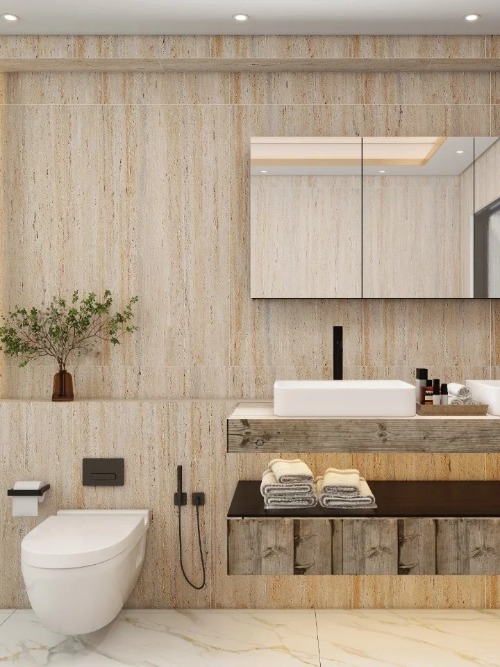
 Privacy settings